Context
Details
Scope
Volunteer work
Improving design for prototype web-app
Role
Research
UX & UI design
Tools
Figma
Figjam
Adobe Acrobat
Impact
MVP Dashboard Changes
What can we do right now to improve the dashboard experience?
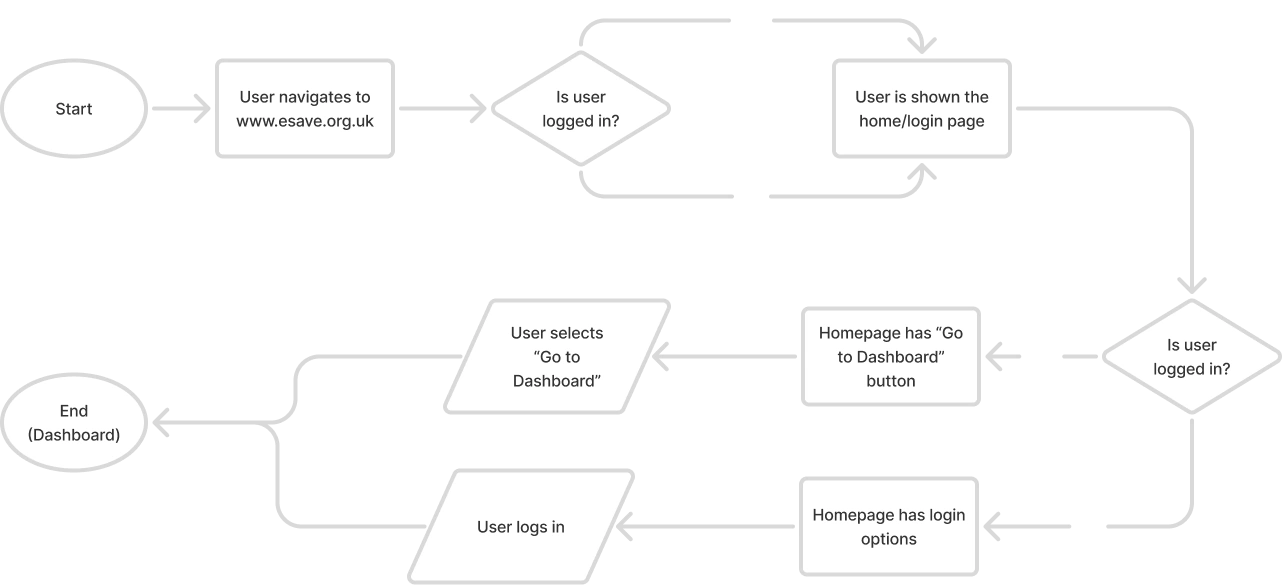
Original User Flow
Navigating to the dashboard
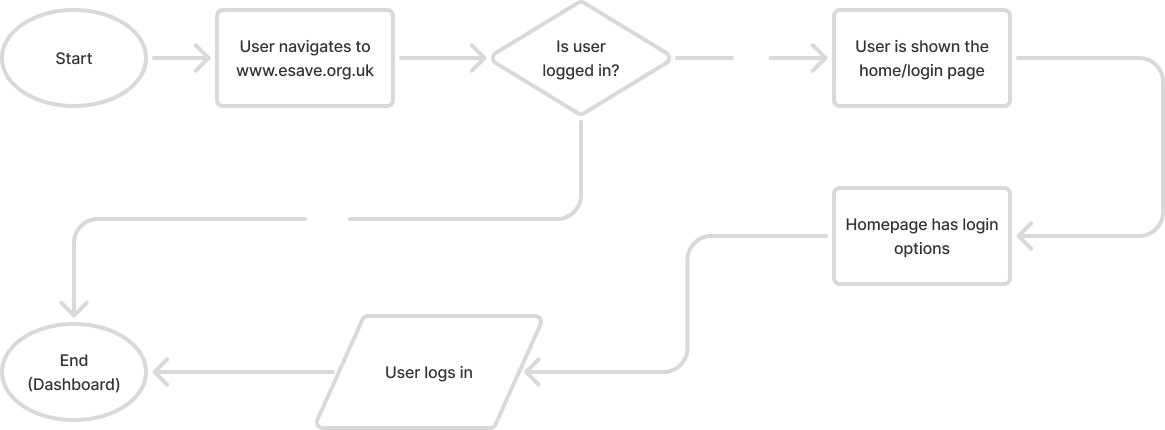
Proposed New User Flow
Navigating to the dashboard
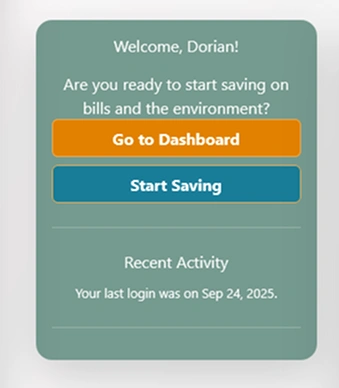
Logged In Users
- Already using the app - don't need to be sold on it via the homepage
- Want to quickly get into logging their savings - by removing a click from the equation via the logged-in conditional redirect, we take away an obstacle to that.
Homepage Breakdown
"Start Saving"
- Double of "Start Savings" from the dashboard
- Very similar to "My Savings" from the dashboard
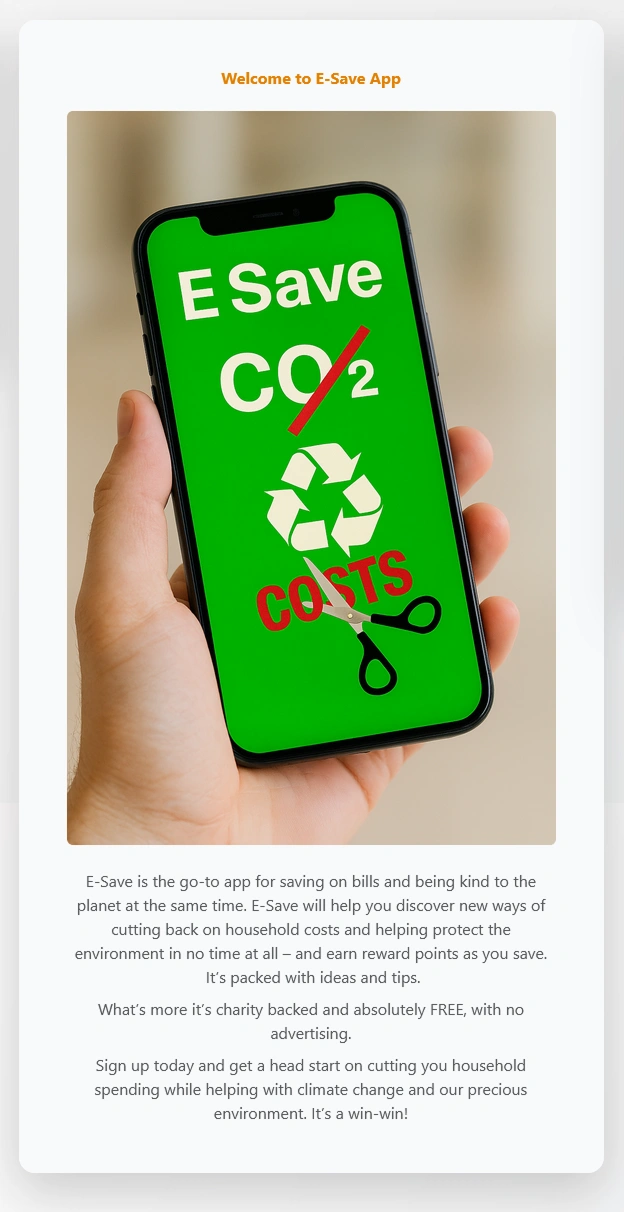
E-SAVE Pitch
- Good, but large image places it below the fold
- Tells logged-in users to sign up
- Doesn't include hyperlinks or a button to take potential users to the sign up page
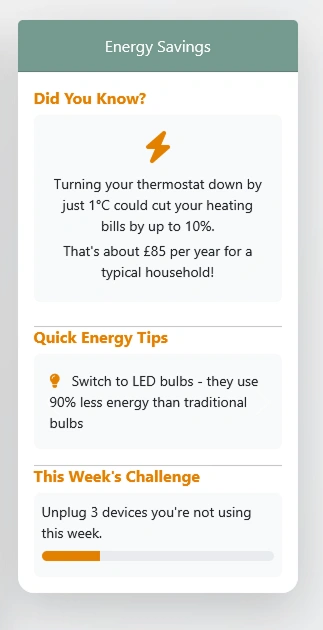
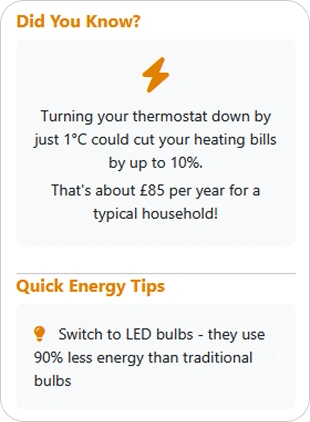
"Did You Know?"
- Like a lengthened version of Quick Energy Tips
- May better serve in its own section, with a prompt for the user
"Quick Energy Tips"
- Feel most appropriate for new users and beginners
Weekly Challenge
- Would best serve logged-in users
- Currently non-functional
- No CTA - users should be able to log their challenges
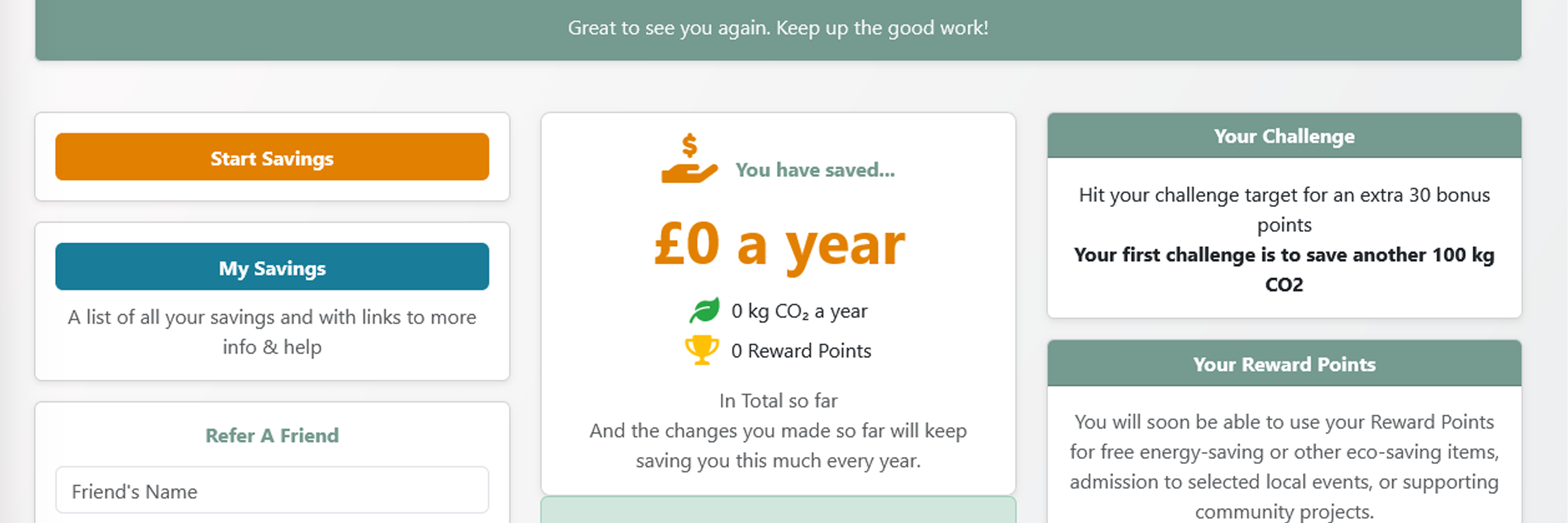
Dashboard Breakdown
-
"Start Savings"
- Lacks Context
- Placed higher in hierarchy than "My Savings", which may receive more daily use
-
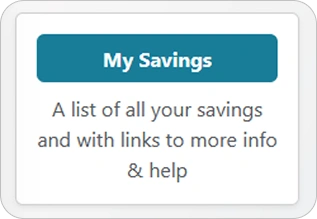
My Savings
- Sends the user elsewhere, but doesn't actually tell them anything.
- If savings don't need to be logged daily, perhaps they don't belong on the dashboard.
-
Total Savings
- Placed top and central - the most important section with information that the user should see on every login
-
Log-in Greeting
- Displays at the bottom of the page, below another welcome message.
- Should be cut, or attached to the original welcome message to prevent clutter.
-
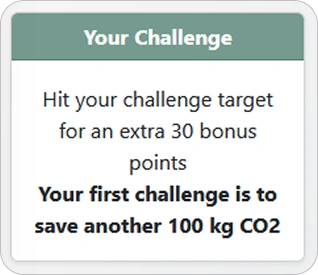
"Your Challenge"
- Different from the challenge on the homepage.
- Offers no prompts or suggestions on how to complete.
-
"Your Reward Points"
- The purpose of a dashboard is to present information to the user.
- By hiding the number of reward points in a different section, or behind a click, we take away from that purpose.
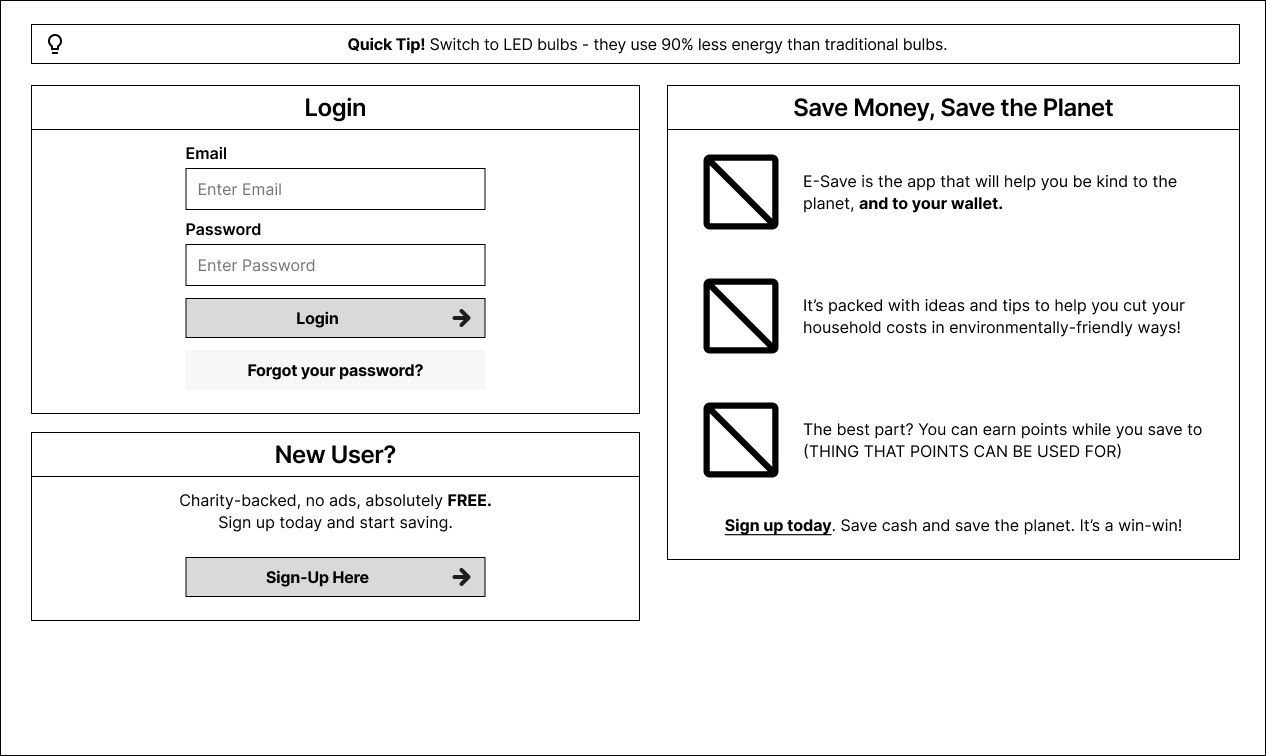
Reworked Homepage
(MVP Sketch)
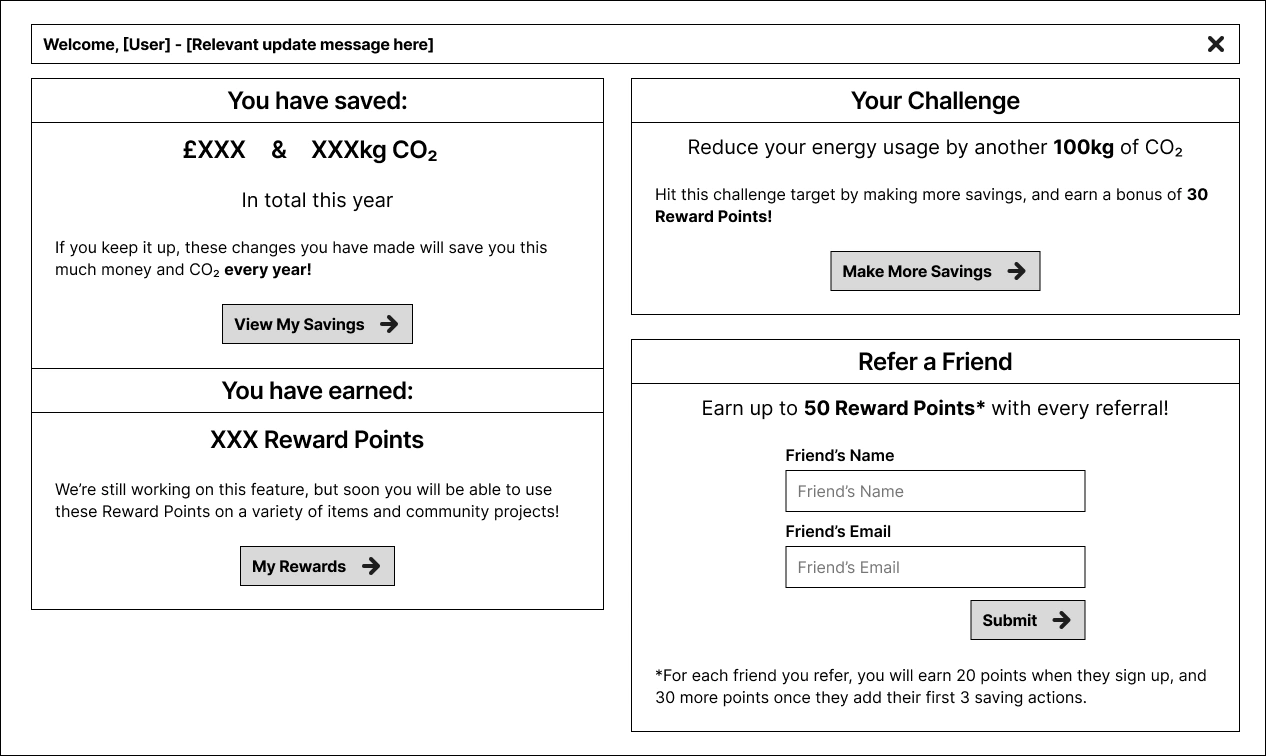
Reworked Dashboard
(MVP Sketch)
Rethinking The Dashboard
Encouraging passively sustainable users to become eco-frontrunners
Sustainability Personas
Adapted from KerryDigest - The Four Personas of Sustainability-minded Consumers
-
Inactive
- Sustainability not a key factor in making purchases
- Believe govt. and industry are responsible for sustainability
- Extrinsic sustainability - Priorities:
- Natural resource preservation
- Recycling
- Animal/Community welfare
- Price & lack of intention are barriers to their sustainability.
- Make up 6% of sustainability-minded consumers, but are a window into the 51% of consumers who don’t currently prioritise sustainability, but could in the future.
-
Passive
- Prioritise sustainability, but lack of resources, products and planning get in the way.
- Extrinsic sustainability - Priorities:
- Environment protection
- Animal welfare
- Food waste
- Other similar topics
- Price is a key barrier to these users acting more sustainably.
- Make up 24% of sustainability-minded consumers.
- Typically older users.
-
Follower
- Sustainability is a key priority for them.
- Purpose-driven consumers.
- Transition sustainability - between extrinsic and intrinsic.
- Feel that sustainability is mostly environmentally focussed, but also something that has a personal effect on them.
- Lack of time and resources are the biggest barriers to their sustainability.
- Likely to switch to sustainable brands with an inspiring vision and purpose.
- Make up 23% of sustainability-minded consumers.
- Typically younger users.
-
Frontrunner
- Embrace the environmental, social and individual impact of sustainability.
- Most likely to sacrifice price, convenience and brand affinity for sustainability.
- Set the bar for those around them for eco-consciousness.
- Drive and push industries to make environmentally friendly changes.
- Make up 43% of sustainability-minded consumers.
- Exist across age-demographics, but older Millennials (late 30s, early 40s) are more likely to be in this category.
How do they fit?
Where do these sustainability personas align with research for E-SAVE?
Inactive
Relvant Observations from Test Users
-
"This feels like it's for people who already know what they need to do to be eco friendly, but I'm a complete beginner"
-
"Is it a good thing to save lots of carbon?"
-
"Don't damage your washing machine? Am I not already doing that?"
Passive
Relvant Observations from Test Users
-
"These (top options) are infeasibly expensive for me. I'm a bit put off"
-
"(User opened ... dropdown and sorted by cost ascending)"
-
"I feel like you need to lower the barrier to entry"
Follower
Relvant Observations from Test Users
-
"I already air dry my clothes"
-
"Some of these feel like daily tasks, but some of these feel like they need full guides"
Frontrunner
Relvant Observations from Test Users
-
"I'll immediately go for repair clothes, because I already do that"
-
"Add something like 'do not buy a new smartphone if your current one isn't broken' - the metals needed for chip manufacture are very eco-costly to mine."
-
"(Repair clothes) Amount of money saved by option I picked felt much larger than expected due to other eco behaviours I already do i.e. buying less + secondhand clothing ... "
Meeting Expectations
What might users want from a dashboard?
-
Inactive
Beginner: Maybe doing some recycling, but more focussed on other priorities.
- Information/Tips on how sustainability affects the world around them, and how it relates to their carbon saved.
-
Passive
Developing eco-awareness: Starting to incorporate eco-friendly practices and learning more about sustainable living.
- Easy, daily, eco-friendly actions that can be tracked instantly (think daily recycling, making a journey on foot or by bus instead of using the car).
-
Follower
Moderately eco-minded: Make conscious efforts to reduce environmental impact in daily routines.
- Challenges and suggestions that will take them from Follower to Frontrunner
-
Frontrunner
Very eco-minded: Actively seek out sustainable options in all aspects of life.
- Pushes towards some of the bigger impact options (changing home insulation, etc.)
- Encouragement to spread the word to others
Passive to Frontrunner
A Persona-Based Approach
Our Current Approach
- The Saving actions we currently show the user are presented as yearly savings
- This de-incentivises the user from visiting the app often
- Users not visiting often puts us at risk of being forgotten.
- We have a weekly challenge section that isn’t currently working.
- Will just one weekly challenge be enough to keep people returning to us?
- Users must find all saving actions by themselves.
- They could be overwhelmed by choice.
An Approach that may reach this goal
- Providing the user with multiple weekly - or even daily - saving actions.
- Emphasis on challenges and goals.
- Rewarding users for small eco-wins that bit-by-bit build up to bigger changes.
- Presenting possible new saving actions to the end-user before they dive into the categories.
How Does It Work?
Implementing the push from passive to frontrunner
-

Weekly/Daily Saving Actions
- Users regularly visit the app for rewards
- Builds a simple association: eco-friendly action = reward
- Repetition re-enforces the idea
-

Challenges & Goals
- Celebrate small wins with the user
- These could become slightly more challenging over time
- Eases the user into making more eco-friendly choices
- Again, re-enforces an association between eco-friendly actions and feeling good
-

Rewarding small wins
- Showing the user the savings they have made building up gradually may encourage them to take on bigger saving actions
- For example: £120 is a large, but reachable number in terms of savings. They could use the money they've saved to Install Thermostatic Radiator Valves, saving even more next year.
-

Suggested Actions
- Gives new users an immediate direction to go in, and an introduction to our card system
- Experienced users won't stagnate in their eco habits - encouraged to try something new
Smaller-Scale Changes
Expanding on features to encourage exploratory behaviour in users
Rethinking: Challenges
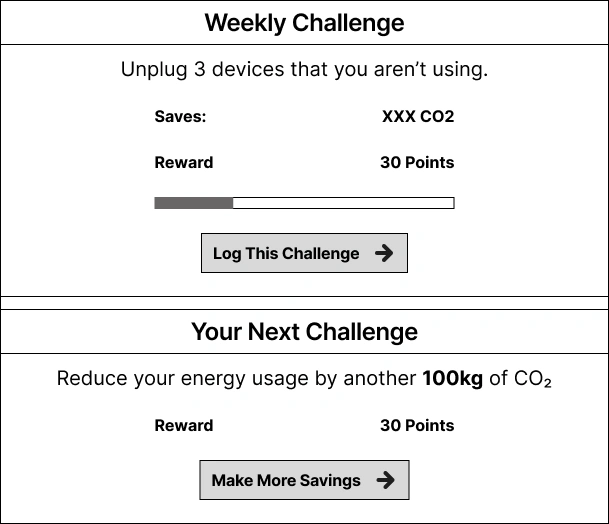
(Presumed new flow implemented)
-
Weekly Challenge
- Limited time option takes priority, so sits on top.
-
Saves/Reward
- Clear labelling so the user knows the environmental and personal benefits at a glance.
-
"Log This Challenge"
Temp. Wording
- Button label and link may be challenge-dependent.
- In this case, perhaps it takes the user to a short-form where they fill out what devices they unplugged.
-
Make More Savings
- Link could change depending on challenge e.g. Could have a cooking or household waste theme.
Things to think on:
- The "Your Next Challenge" (Previously "Your Challenge") section appears to be most useful to new users.
- Can users run out of challenges?
- What will happen to this section if they do?
Rethinking: Start Savings
Helping users find new actions
-
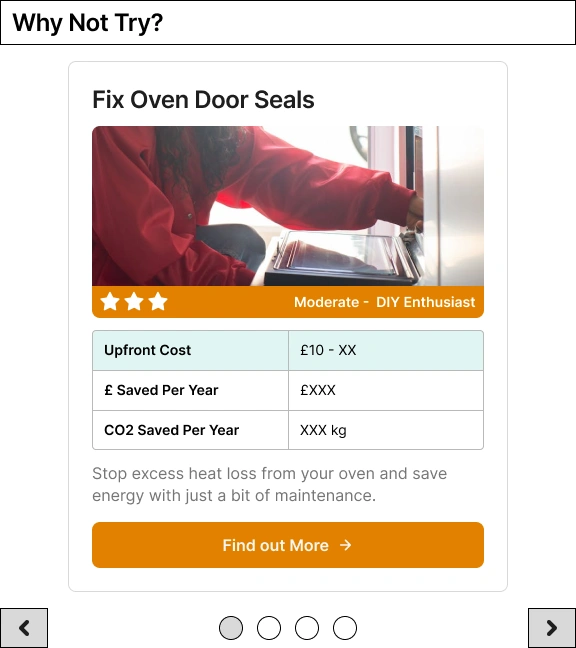
As of now
- Users are expected to find all new savings actions by themselves
- This means looking through potentially all categories and actions to find something they can do
-
What this feature could be
- User is shown at least one action card they haven't tried before (an action not present in My Savings) on the dashboard
- Actions shown depend on the user's profile
-
What are the benefits?
- Some friction taken away from the user finding new actions to try
- Allows you to provide a "starting point" for new users
- Users may be encouraged to try actions and browse categories that they would have been more hesitant to look at
Full-Scale Changes
Reworking saving actions to build consistent habits in users
Rethink: My Savings
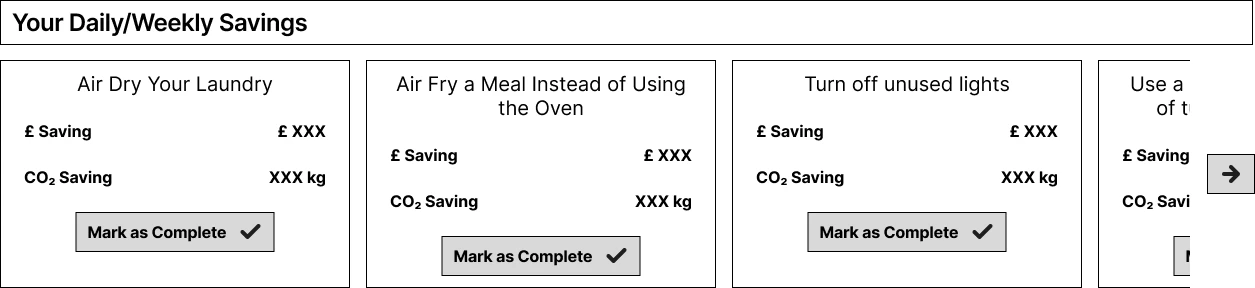
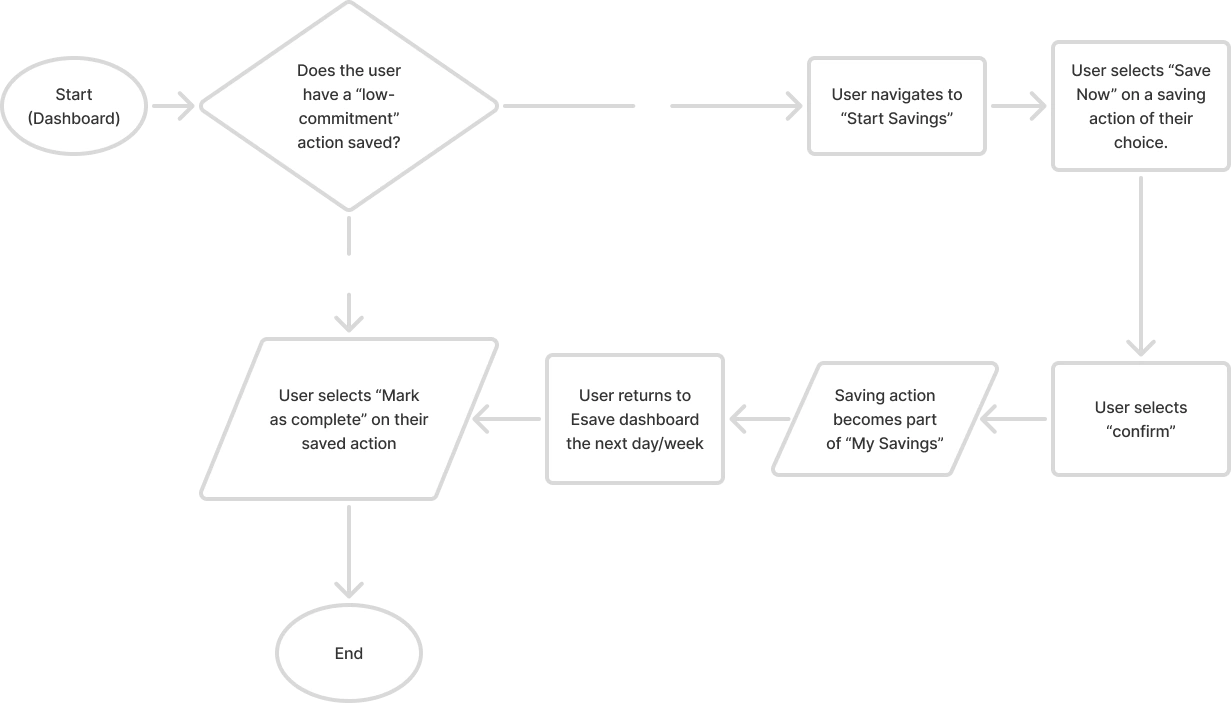
A Look at our "low-commitment" actions
-
What is a low-commitment action?
- An action that requires minimal effort, cost or lifestyle change
- An action that could be performed regularly
- An action that can be performed continuously as a habit
-
What changes?
- Smaller amounts of monetary and CO₂ savings
- Users have the option to "tick off" this action without going through all screens or multiple steps.
-
What are the benefits?
- Users return to the app on a more regular basis
- Users are encouraged to build daily eco habits
- Users see the benefits building in real time
- We rely less on user memory and the honour system for these tasks and are able to track them in more detail
Original User Flow
Repeating a "low commitment" action
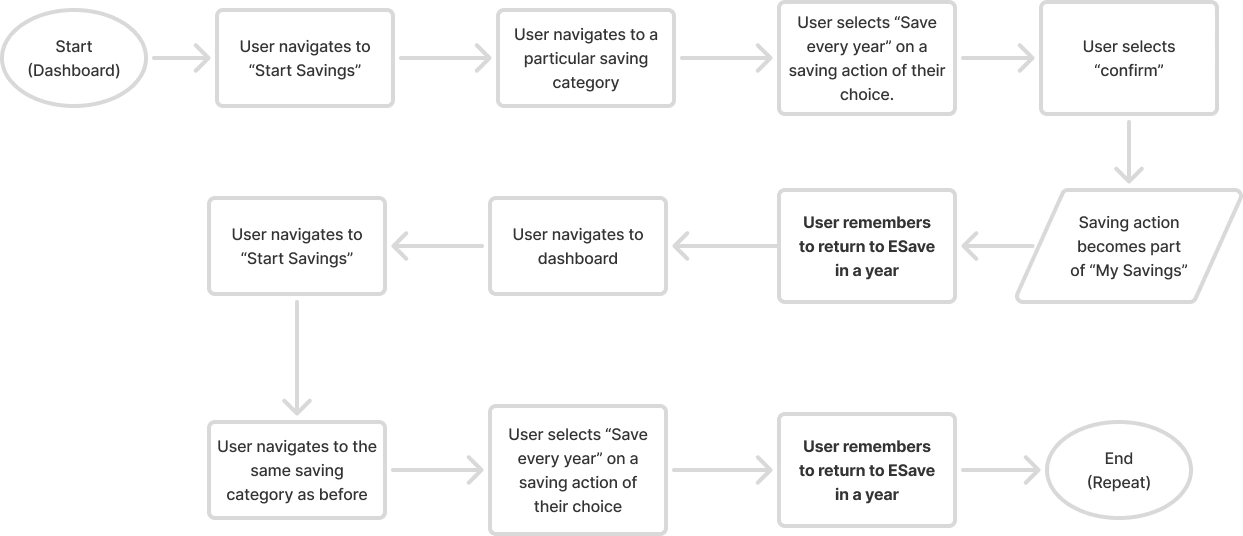
Proposed New User Flow
Repeating a "low commitment" action
Rethink: My Savings
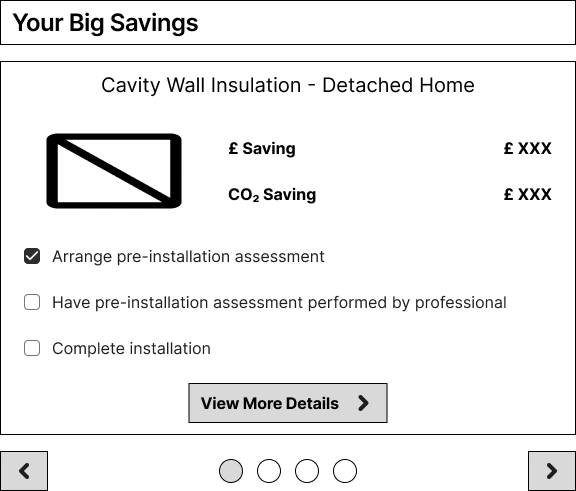
A look at "high-commitment" actions
-
What is a high commitment action?
- An action that requires a high amount of effort, costs, or lifestyle changes
- An action that is likely only to be performed once or twice in total by the user
- An action with multiple steps and stages that takes more than a single day to perform.
-
What changes?
- “High-commitment” actions are split into multiple stages, rather than being monolithic
- Users can “tick off” action stages right from the dashboard
- Reward points may be offered for action stages if desired, but financial and CO₂ savings cannot be recorded until entire action is complete
-
What are the benefits?
- Checkbox stages display below daily actions, so they serve as a daily reminder of what needs to be done next
- Task is broken down into smaller stages, making it feel more manageable for the user
- Users see the benefits building in real time
- We rely less on user memory and the honour system for these tasks and are more able to track them.
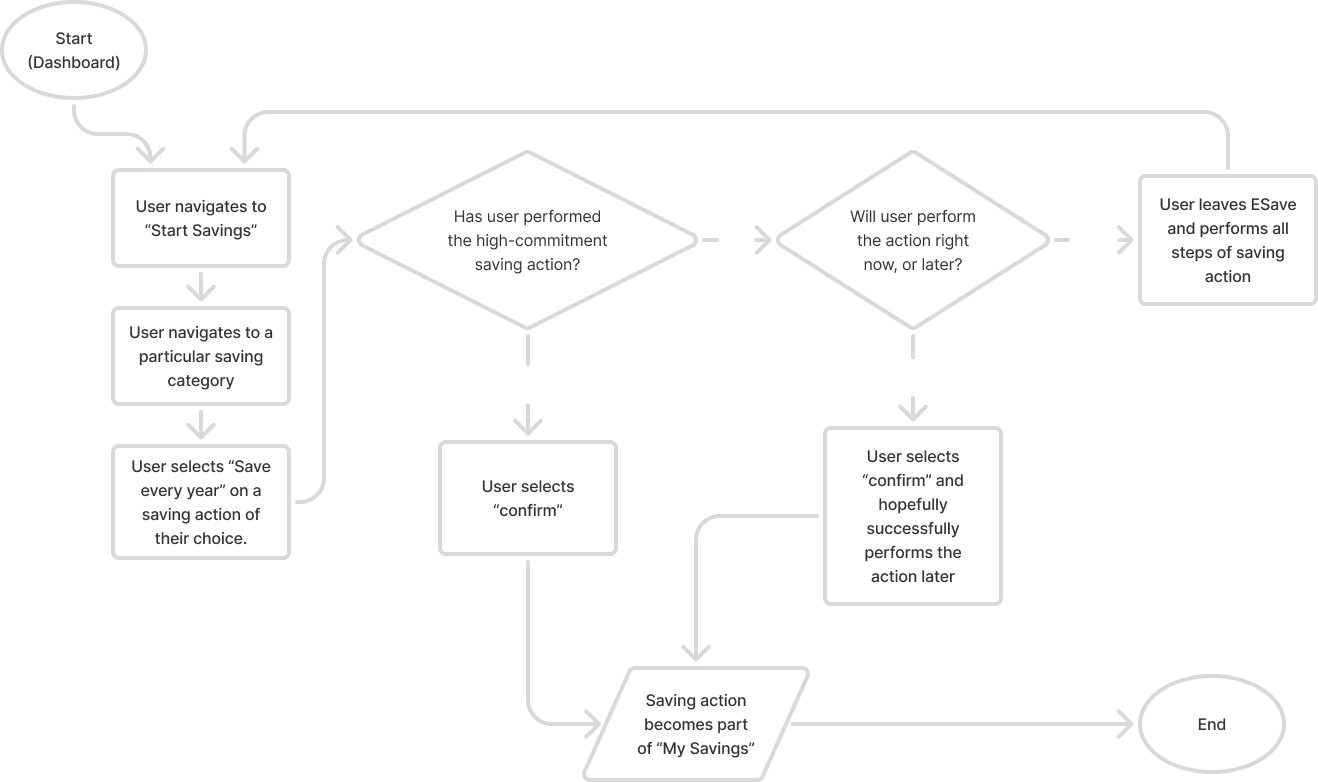
Original User Flow
Performing a "high-commitment" action
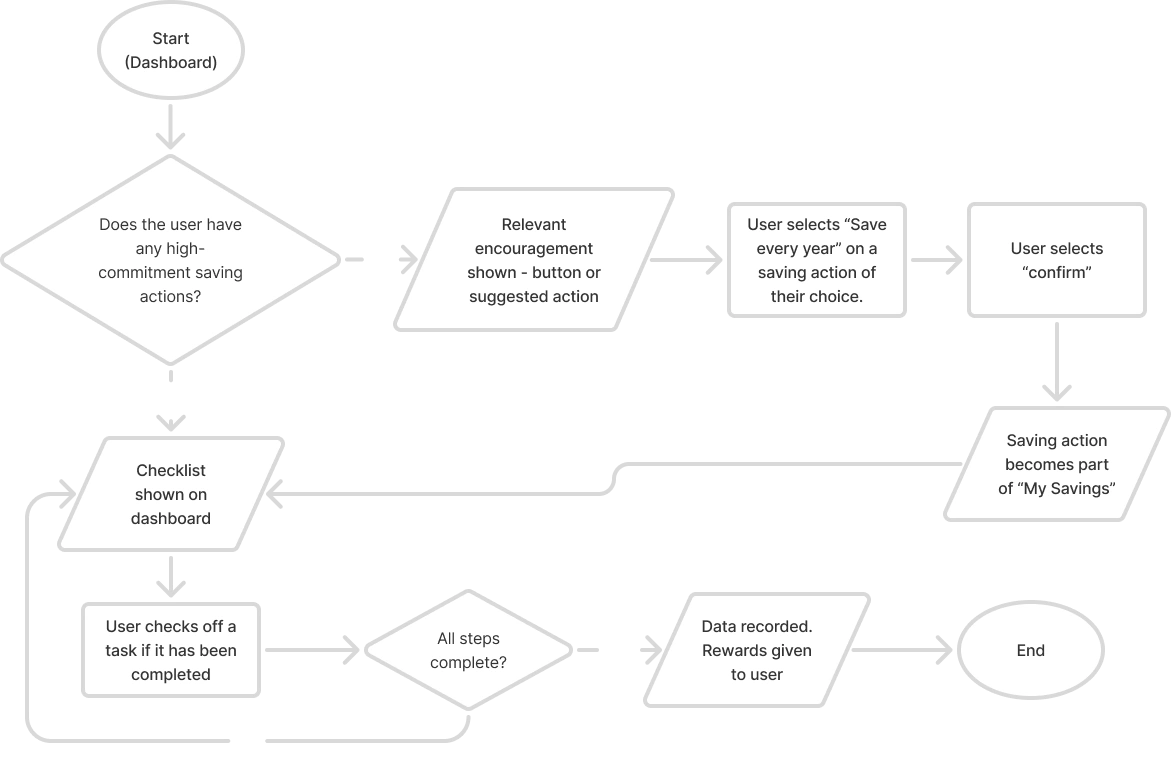
Proposed New User Flow
Performing a "high-commitment" action
Putting it all together
Combining all feature suggestions into a single dashboard
Reworked Dashboard Sketch
All proposed changes implemented
![]()
Repeating a "low commitment" action
Rethink: My Savings
A look at "high-commitment" actions
-
What is a high commitment action?
- An action that requires a high amount of effort, costs, or lifestyle changes
- An action that is likely only to be performed once or twice in total by the user
- An action with multiple steps and stages that takes more than a single day to perform.
-
What changes?
- “High-commitment” actions are split into multiple stages, rather than being monolithic
- Users can “tick off” action stages right from the dashboard
- Reward points may be offered for action stages if desired, but financial and CO₂ savings cannot be recorded until entire action is complete
-
What are the benefits?
- Checkbox stages display below daily actions, so they serve as a daily reminder of what needs to be done next
- Task is broken down into smaller stages, making it feel more manageable for the user
- Users see the benefits building in real time
- We rely less on user memory and the honour system for these tasks and are more able to track them.
Original User Flow
Performing a "high-commitment" action
Proposed New User Flow
Performing a "high-commitment" action